


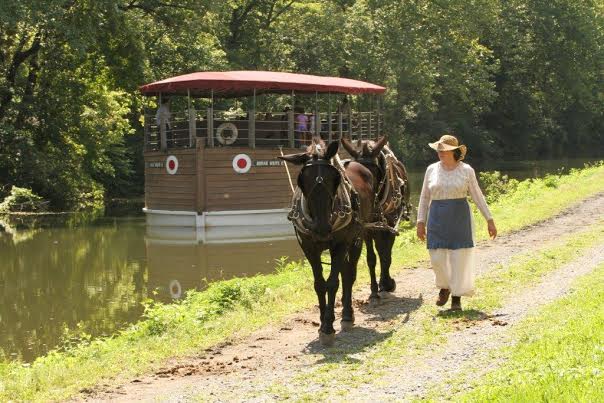
National Heritage Areas are conserving roughly a 1,000 miles of canal corridors across the country. These historic waterways and towpaths are becoming tomorrow’s network of trails and blue ways, connecting population centers to parks and historical sites of national, state, and local importance. Find out more the partnership model of management and the entrepreneurial strategies key to NHA success in this guess post.
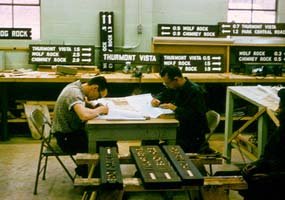
Fifty years ago, President Lyndon B. Johnson declared a “War on Poverty.” How did the many programs associated with this effort shape the material, social and political landscapes of the United States? What can a National Park, home to the nation’s first Job Corps site in 1965, reveal about the legacies, both individual and collective, of the War on Poverty? Guest observer Angela Sirna offers her observations on these complex questions.

Each year shorebirds use habitats across a vast geography, undertaking some of the longest migrations of any animals on earth. Atlantic Flyway shorebirds are exposed to a diverse set of human-induced threats like habitat loss and change, hunting in the Caribbean, and predators. Effective shorebird conservation thus requires a wide-ranging approach to identify and reduce these threats at sites all along the flyway. Only with such a flyway-scale approach can we reverse the serious declines we are witnessing in many of our shorebird populations.
Interested in the roots of National Heritage Areas? Check out these proceedings from a 1983 conference on greenline and urbanline parks.
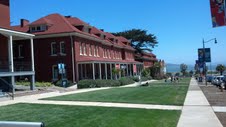
In this piece Guest Observer Rolf Diamant examines the Presidio of San Francisco. The 1,500-acre former military post is national parkland managed jointly by the federally chartered Presidio Trust and NPS, nested within the much larger Golden Gate National Recreation Area.
National Heritage Areas are conserving roughly a 1,000 miles of canal corridors across the country. These historic waterways and towpaths are becoming tomorrow’s network of trails and blue ways, connecting population centers to parks and historical sites of national, state, and local importance. Find out more the partnership model of management and the entrepreneurial strategies key to NHA success in this guess post.
Fifty years ago, President Lyndon B. Johnson declared a “War on Poverty.” How did the many programs associated with this effort shape the material, social and political landscapes of the United States? What can a National Park, home to the nation’s first Job Corps site in 1965, reveal about the legacies, both individual and collective, of the War on Poverty? Guest observer Angela Sirna offers her observations on these complex questions.
Each year shorebirds use habitats across a vast geography, undertaking some of the longest migrations of any animals on earth. Atlantic Flyway shorebirds are exposed to a diverse set of human-induced threats like habitat loss and change, hunting in the Caribbean, and predators. Effective shorebird conservation thus requires a wide-ranging approach to identify and reduce these threats at sites all along the flyway. Only with such a flyway-scale approach can we reverse the serious declines we are witnessing in many of our shorebird populations.
Interested in the roots of National Heritage Areas? Check out these proceedings from a 1983 conference on greenline and urbanline parks.
In this piece Guest Observer Rolf Diamant examines the Presidio of San Francisco. The 1,500-acre former military post is national parkland managed jointly by the federally chartered Presidio Trust and NPS, nested within the much larger Golden Gate National Recreation Area.